Top Tier Auto Security

4K Dashcam Install

Sony Starvis 2 Sensor — Parking Mode & Hidden Hardwired Installation

Dashcams

Protect Yourself on Toronto Roads

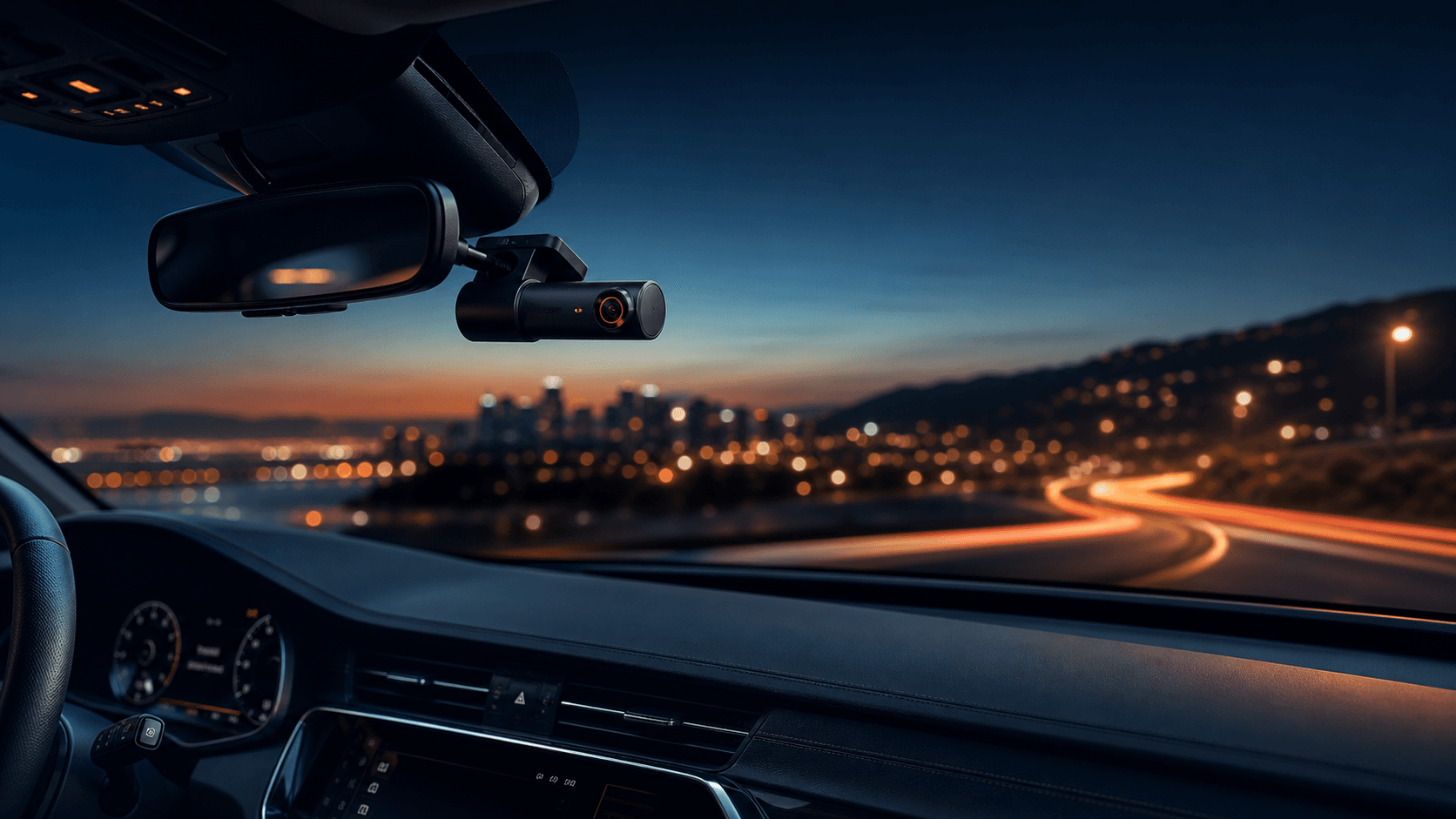
In today's driving environment, dashcams provide invaluable protection against insurance fraud, hit-and-runs, and disputed accidents. We install VUEROID 4K cameras with the Sony Starvis 2 sensor — crystal-clear footage day and night, hardwired for clean aesthetics and 24/7 parking mode protection.

Insurance Protection

Protect yourself from fraudulent claims and prove fault in accidents. Objective video evidence can save thousands on insurance premiums.

Accident Evidence

Clear documentation of accidents, traffic violations, and dangerous drivers — essential for police reports and legal proceedings.

Parking Mode Security

Monitor your vehicle 24/7 with motion-activated recording. Capture hit-and-runs, vandalism, and theft attempts while parked.

VUEROID Systems

Choose Your Dashcam System

Professional hardwired installation with Sony Starvis 2 imaging, parking mode protection, and up to 512GB storage.

VUEROID D20

Entry Level

4K front camera with Sony Starvis 2 — sharp day and night footage from a single clean lens.

$379.99+ install · SD card required
  • 4K UHD front recording
  • Sony Starvis 2 night vision sensor
  • Loop recording & G-sensor
  • Parking mode ready
  • Up to 512GB storage support
  • Hardwired installation

Best for: Drivers who want sharp 4K front coverage

Most Popular

VUEROID D21

Most Popular

4K dual-channel front + rear with Wi-Fi and GPS — full coverage, front to back.

$549.99+ install · SD card required
  • 4K front + rear cameras
  • Sony Starvis 2 sensor
  • 24/7 parking mode (motion & impact)
  • Wi-Fi app connectivity
  • GPS tracking
  • Up to 512GB storage support

Best for: Complete front and rear coverage with parking protection

VUEROID S1 4K Infinite

Top Tier

3-channel flagship with LCD, cloud connectivity, and interior recording — the last dashcam you'll ever need.

$689.99+ install · SD card required
  • 3-channel coverage (front, rear, interior)
  • 4K UHD with Sony Starvis 2
  • Built-in LCD touchscreen
  • Wi-Fi, GPS & cloud connectivity
  • 24/7 parking mode
  • Up to 512GB storage support

Best for: Maximum coverage, remote viewing, and fleet vehicles

Installation

Professional Hardwired Installation

Clean, permanent, reliable — we route every wire through the headliner and pillars so nothing is visible.

Why Hardwire?

  • Clean installation with no visible cables
  • Parking mode functionality when vehicle is off
  • Doesn't occupy your 12V power outlet
  • Reliable power in Canadian winters
  • Professional wire routing and mounting
  • Integrated with vehicle electrical system

What's Included

  • Professional dashcam mounting
  • Complete hardwired power installation
  • All wiring hidden in headliner & pillars
  • Parking mode activation
  • WiFi/app connectivity setup
  • Full system testing & walkthrough

1-Year Parts & Lifetime Labour Warranty

Every dashcam system we install is backed by a 1-year warranty on parts and a lifetime warranty on labour. If anything needs servicing down the road, our workmanship is covered for as long as you own the system.

FAQ

Dashcam Installation FAQ

For most drivers, 1440p (2K) is the sweet spot. It captures licence plates clearly at highway speeds, provides sharp night footage, and does not overwhelm your SD card the way 4K does. 1080p is acceptable for budget setups but can struggle with licence plate legibility at distance. 4K front cameras offer excellent detail but produce very large files that fill a 128GB card quickly and generate more heat, which is meaningful in Canadian summers. For a dual-cam setup, 1440p front and 1080p rear is a proven configuration. Top Tier installs professional-grade systems including Viofo, 70mai, and Thinkware.

Yes. Modern quality dashcams use Sony Starvis or similar low-light image sensors that perform significantly better than budget cameras in night conditions. Look for cameras with a wide aperture (f/1.6 or lower), HDR capability, and proven night sample footage. In Canadian winters with reduced daylight hours, night recording quality matters enormously as it is often when parking lot incidents, hit-and-runs, and vandalism occur. The Thinkware and Viofo lines Top Tier carries are specifically selected for their night performance. Ask Top Tier to see real-world night footage samples before you purchase.

Most dashcams record both audio and video simultaneously by default using a built-in microphone. This can be valuable for capturing on-road incidents or conversations during accidents. However, audio recording raises privacy and consent considerations in Canada. Most cameras allow you to disable audio recording through the settings menu if preferred. For insurance and legal purposes, video footage alone is typically sufficient for establishing fault in collisions. Top Tier can configure your audio settings at the time of installation based on your preference.

Yes. This is called parking mode, and it is one of the most valuable features a dashcam can have. Parking mode keeps the camera active while your engine is off, triggering recording when motion or impact is detected. This captures hit-and-run incidents in parking lots, vandalism, break-in attempts, and catalytic converter theft. There are three types of parking mode: motion-triggered, G-sensor (impact-triggered), and continuous low-bitrate recording. The best setups use a buffered mode that captures a few seconds before and after the trigger event. Parking mode requires either a hardwire kit connected to a constant 12V source or a dedicated dashcam battery pack, both of which Top Tier can install professionally.

Quality dashcams offer a field of view between 120 and 170 degrees. Wider is not always better: extremely wide angles introduce fish-eye distortion that can make licence plates difficult to read at the edges of the frame. A 135 to 145 degree FOV is generally considered optimal, wide enough to capture adjacent lanes and most intersection activity without significant distortion. Rear cameras benefit from wider FOV since they are covering a larger area. Top Tier will position your camera for optimal coverage during installation, as mounting angle is as important as field of view.

Dashcam use is legal across all Canadian provinces, including Ontario and British Columbia. Footage from dashcams is routinely accepted by insurance companies and police as evidence in collision investigations. Canadian courts have also accepted dashcam footage in civil and criminal proceedings. The key legal principle is that recording in public spaces is generally permitted since there is no reasonable expectation of privacy on public roads. Always ensure your footage is unedited when submitting to police or insurers, as edited footage can be challenged.

There is no legal requirement in Canada to disclose dashcam video recording to passengers in public-facing situations. However, audio recording of private conversations raises higher privacy considerations under PIPEDA and provincial privacy laws. Best practice is to let passengers know if you are recording audio, particularly in a professional context such as rideshare or commercial vehicle use. Some provinces, notably Quebec, apply stricter privacy standards. Top Tier can configure the system to disable audio recording while keeping full video functionality.

Yes. Canadian insurance companies accept dashcam footage as supporting evidence in collision claims. Footage can establish fault, corroborate your version of events, and potentially accelerate claim resolution. However, dashcam footage can also work against you if it shows you contributed to the accident. Most Canadian insurers have procedures for submitting digital evidence. In a hit-and-run scenario, parking mode footage capturing the other vehicle's licence plate is particularly powerful evidence.

Yes. Recording licence plates of vehicles in public spaces is legal in Canada. Licence plates are displayed publicly and are not considered private information. This is in fact one of the most useful aspects of dashcam footage: capturing licence plates of hit-and-run drivers or individuals vandalizing your parked car. Police and insurers specifically look for licence plate footage when investigating incidents. The legality issue only arises if you use that footage in ways that constitute harassment or surveillance of a private individual.

DIY installation is possible for basic setups where you just plug into the 12V cigarette lighter, but it leaves a visible wire running down your windshield and does not support parking mode. Professional hardwire installation hides all wiring behind panels, taps into a switched and constant power source for parking mode, and ensures the camera is optimally positioned and angled. For parking mode functionality, which requires connection to a constant 12V circuit with a voltage cutoff to protect your battery, professional installation is strongly recommended. Top Tier's installation ensures clean wiring, optimal camera placement, and full parking mode configuration.

A properly hardwired dashcam with a low-voltage cutoff will not drain your battery. The hardwire kit includes a voltage monitor that automatically shuts down the dashcam when your battery drops to a preset level, typically 11.6 to 12.0V, ensuring you can always start your car. The typical power draw of a dashcam in parking mode is 3 to 5 watts, which is modest. Top Tier installs hardwire kits with adjustable voltage cutoffs so you can set the threshold appropriate for your battery age and climate conditions.

Absolutely. Dashcams run on 12V power, not USB, and all vehicles manufactured in Canada since the 1990s have a 12V system. For plug-in setups, any car with a cigarette lighter or 12V accessory port can power a dashcam. For hardwired installations recommended for parking mode, the installer taps directly into your fuse box. No USB or modern ports are needed. Older vehicles are actually straightforward to hardwire because their fuse boxes are simpler. Top Tier installs dashcams on vehicles of all ages.

At 1080p, approximately 8 to 10 GB per hour of driving is used. At 1440p, roughly 12 to 15 GB per hour. A 128GB card gives you 8 to 12 hours of continuous recording before the oldest footage is overwritten in loop mode. For most daily drivers, 64GB to 128GB is sufficient. For parking mode recordings, which run at lower bitrate, the same card can store significantly more hours. Use a high-endurance SD card rated for dashcam use such as Samsung PRO Endurance or SanDisk High Endurance. Standard consumer SD cards fail prematurely from the constant read-write cycle.

SD card failure is the most common cause of missing footage when people need it most. High-endurance SD cards reduce this risk significantly. For footage you know you will need, immediately lock the file using the camera's emergency record button, which writes it to a protected folder that loop recording will not overwrite. Then export it to your phone or computer as soon as possible. Top Tier recommends checking your SD card every 6 to 12 months by formatting it (not just deleting files) and replacing it if you see write errors.

Most modern dashcams offer smartphone app connectivity via WiFi. You connect your phone to the camera's hotspot, browse footage in the app, and download clips directly to your phone, which you then share like any video file. For police submissions, a direct copy of the unaltered file from the SD card to a USB drive or computer is most credible. Thinkware and Viofo cameras that Top Tier installs both have iOS and Android apps with clean export workflows. At installation, Top Tier walks you through the entire app setup and footage export process.

Top Tier specializes in Viofo, 70mai, and Thinkware, three brands consistently rated at the top of dashcam communities for image quality, reliability, and software support. Thinkware is particularly popular in Canada for its excellent temperature tolerance critical for Canadian winters and summers, strong parking mode performance, and responsive Canadian customer support. Viofo is a favourite among enthusiasts for its Sony Starvis sensors and excellent value. 70mai offers a strong mid-range option with clean app integration. We do not install cheap, no-name cameras.

These three brands occupy slightly different niches. Thinkware is the premium tier with the best parking mode system, excellent cold-weather performance, strong Canadian dealer support, and longer warranty coverage. Viofo is the enthusiast favourite with the best image quality per dollar, Sony Starvis sensors, and a wide model range from budget to 4K. 70mai is the mid-range option with a clean app experience, solid image quality, and the best ease of use. All three significantly outperform budget cameras. For GTA parking conditions and Canadian winters, Thinkware's parking mode consistency makes it the top recommendation for most clients.

Dual camera is the strongly recommended choice for most drivers. Rear-end collisions are extremely common in Toronto and GTA traffic, and without a rear camera you have no footage of the vehicle that hit you. Front-only cameras also miss incidents that happen behind you in parking lots. The cost difference between front-only and dual-cam setups is typically $100 to $250, and it is almost always worth the extra investment. Top Tier installs dual-cam systems with clean wiring routed along the headliner and A-pillar for a factory-finish look.

With a professionally installed hardwire kit set to a 12.0V cutoff, most vehicles can support 8 to 24 hours of parking mode recording without starting problems. Exact duration depends on your battery's age and capacity. Newer vehicles with larger batteries can sustain parking mode longer than older compact cars. For longer-duration protection, such as leaving your car at an airport for a week, a dedicated dashcam battery pack like the Thinkware Energy Pack or Cellink is the solution: it powers the camera independently without touching your car battery at all, providing 24 to 48 or more hours of parking mode.

Yes, and this is one of the most compelling real-world use cases for parking mode. Parking mode footage has captured vandals, hit-and-run drivers in parking lots, catalytic converter thieves, and break-in attempts countless times. For maximum effectiveness: position your rear camera with a downward angle to capture plates of vehicles pulling up behind you, use a camera with buffered parking mode so you capture seconds before the impact, and choose a camera with good low-light capability for night incidents. Top Tier will position your camera angles specifically to maximize parking lot evidence capture.

Some dashcams offer live view via WiFi to a companion app, but this is typically designed for setup and footage review rather than live monitoring while driving, which would itself be a distraction violation in Ontario and BC. You can pull over, connect your phone to the dashcam's WiFi hotspot, and review recent footage. Thinkware's app, Viofo's VicoHome, and 70mai's app all support this workflow. For true remote live monitoring, some cameras support cellular connectivity, which is more common in fleet or commercial applications and is available through Top Tier's GPS and dashcam packages.

Temperature tolerance is a genuine concern in Canada. Car interiors can reach -30°C in January and over 70°C in July in direct sun. Budget dashcams with standard lithium batteries often fail in both extremes: lithium swells in heat and dies in cold. Thinkware cameras use supercapacitor technology instead of a battery, which handles the full Canadian temperature range without damage. Viofo models also generally use capacitors or thermal-resistant designs. Top Tier specifically selects models with proven Canadian climate performance — ask us which models we recommend for year-round reliability.

Yes, and this is one of the most common real-world uses of dashcam footage in Canada. Parking mode footage of hit-and-run incidents has been used by Top Tier clients to successfully identify at-fault drivers, file insurance claims, and involve police. The key factors for usable evidence are: clear licence plate resolution (1440p or higher recommended), adequate low-light performance for night incidents, and parking mode enabled so the camera is running when you are not in the car. Top Tier will configure your system specifically to maximize hit-and-run evidence capability.

A small number of Canadian insurers offer discounts for professionally installed dashcams, though this is less common than discounts for immobilizers or GPS trackers. The more significant insurance benefit is evidentiary: dashcam footage routinely resolves disputed fault in your favour, protects you from fraudulent claims such as staged accidents and brake-checking, and can prevent your premium from increasing after an incident where you were not at fault. Contact your insurer to ask about dashcam discounts, and keep your installation receipt. Top Tier can provide documentation of your installation.

Use a high-endurance microSD card with a U3 / V30 speed class rating as a minimum for 4K recording — regular cards are not designed for the constant write cycles and will fail within months. The best choices recommended by dashcam communities and Top Tier are the Samsung PRO Endurance, SanDisk High Endurance, and Kingston Endurance series, available in 64GB, 128GB, and 256GB. For 4K front-only, 128GB is the practical minimum. For 4K dual-cam setups, use 256GB or configure the rear camera at 1080p to reduce file size. Replace your card every one to two years regardless of apparent condition.

Front-and-rear dual cam is the recommendation for the vast majority of drivers in the GTA. Rear-end collisions account for roughly 30% of all crashes, and without a rear camera you have no footage of the vehicle that struck you. Parking lot incidents, tailgating, and fraudulent brake-checks are also captured by a rear camera but missed entirely by front-only setups. The cost premium for a dual-cam system is typically $100 to $250 over front-only, and Top Tier routes the rear cable cleanly through the headliner for a factory-clean installation. The only case where front-only makes sense is strict budget constraints.

Yes, your dashcam footage can be used against you if it shows you contributed to an accident, ran a red light, or were driving carelessly. This is an important consideration. However, most experienced drivers conclude that the protection against false fault assignments, staged accidents, and hit-and-run drivers far outweighs the risk of self-incriminating footage. If your driving is generally safe and law-abiding, a dashcam is a net positive. Some drivers disable the camera on specific routes if they are concerned, but Top Tier's position is that honest drivers benefit more from dashcam footage than they are hurt by it.

Ready to Protect Your Drive?

Get a free quote for professional dashcam installation in Scarborough. Protect yourself on the road with reliable video evidence.

    WhatsApp